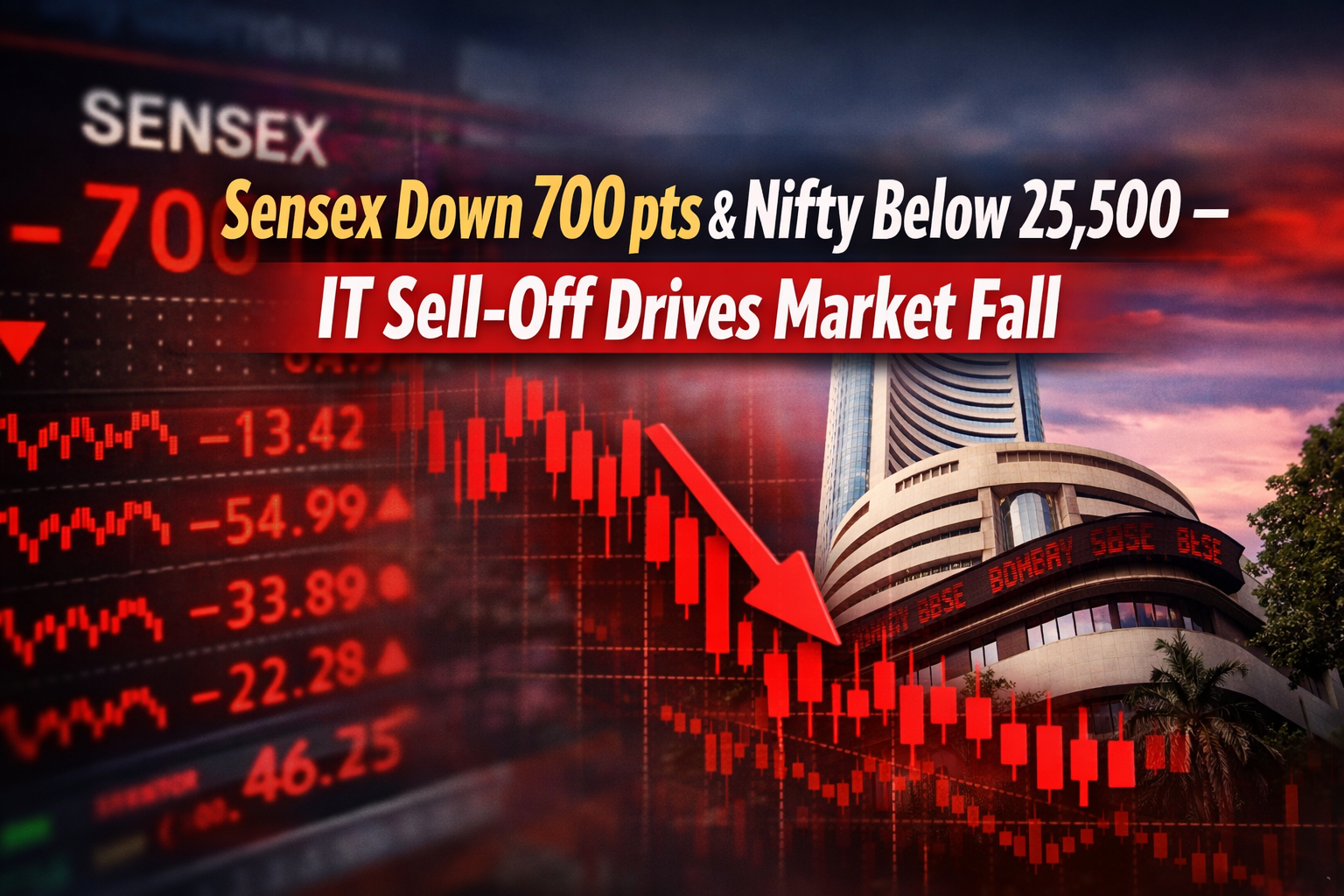
The Indian stock market witnessed a sharp sell-off on Tuesday, with the benchmark indices BSE Sensex tumbling about 700 points and the NSE Nifty50 slipping below the crucial 25,500 level. The decline took many market participants by surprise, raising questions about underlying triggers and broader economic implications.
In this in-depth analysis, we unpack the key reasons behind the market downturn, sectoral performance, investor sentiment, and what lies ahead for Dalal Street.
📉 Market at a Glance: Sensex & Nifty Movement
Contents
-
Sensex: Down roughly 700 points from previous levels.
-
Nifty50: Closed below the 25,500 mark.
-
Intraday Volatility: Significant swings witnessed throughout the trading session.
This fall erases a chunk of recent gains, reflecting renewed caution among traders and systematic selling across major sectors.
🧨 Why Markets Sold Off Today – Key Drivers
1. Heavy IT Sector Sell-Off
Information Technology (IT) stocks led the sell-off, dragging both Sensex and Nifty lower. Major IT names such as Infosys, TCS, Wipro, and HCL Tech were among the most impacted, with their valuations dropping sharply during the session.
Reasons for IT weakness include:
-
Profit booking after recent strong rallies.
-
Concerns over global demand slowdown in technology services.
-
Analyst downgrades on IT valuations and earnings estimates.
2. Profit Booking at Higher Levels
Markets had seen a rally in preceding sessions, attracting short-term traders to book profits. This intensified selling pressure, particularly in blue-chip stocks, as investors rotated out to secure gains.
3. Weak Global Cues Weighing on Sentiment
Asian markets were broadly negative, and US equity futures showed signs of weakness ahead of key economic data. These external cues reinforced risk-off sentiment, prompting investors to trim exposure to Indian equities.
4. Foreign Institutional Investors (FII) Outflows
While not the only driver, foreign flows remained lukewarm, with FIIs continuing net-selling in recent sessions. Persistent outflows tend to reduce market liquidity and dampen domestic investor confidence.
📊 Sector-Wise Impact: Winners & Losers
🔻 Notable Weak Sectors
-
IT: Largest drag on the indices.
-
Banking: Also showed weakness amid broad market selling.
-
Realty & Consumer Services: Lagged due to risk-off trading.
✔️ Relatively Stable Sectors
While most sectors ended lower, some defensive segments like FMCG and Pharma managed to limit losses due to safe-haven buying by risk-averse investors.
📌 Technical Levels to Watch
According to analysts, the breach of 25,500 on Nifty50 is a key psychological support level. Falling below it could attract further selling pressure from algorithmic and retail traders alike.
🚨 Immediate Support:
-
25,300 – next downside floor based on recent lows.
📈 Resistance Levels for Bounce:
-
25,700–25,850 zone, where buyers may re-enter.
💡 Investor Sentiment & Market Psychology
The decline reflects a mix of profit booking, sector rotation, and renewed caution among institutional investors. Key observations:
-
Short-term traders are reducing risk amid volatility.
-
Long-term investors are monitoring technical breakdowns before committing capital.
-
News headlines globally, including Federal Reserve signals and macroeconomic data, are influencing trader behaviour.
🛠️ What Investors Should Watch Next
📌 Earnings Season Updates
Upcoming corporate earnings reports, especially from IT companies, could either confirm or defuse current weakness.
📌 Global Macro Data
US jobs numbers, inflation figures, and Fed policy announcements remain on market participants’ radars.
📌 FII Flow Patterns
Tracking foreign investment flows could provide clues if selling persists or reverses.
🧠 Conclusion
The sharp fall in Sensex and Nifty below 25,500 marks a significant moment in market action, as selling pressure was led by a deep IT sector unwind, profit taking, and broader risk-off sentiment. While short-term volatility remains elevated, longer-term investors may view interim dips as opportunities—provided market fundamentals remain intact.