
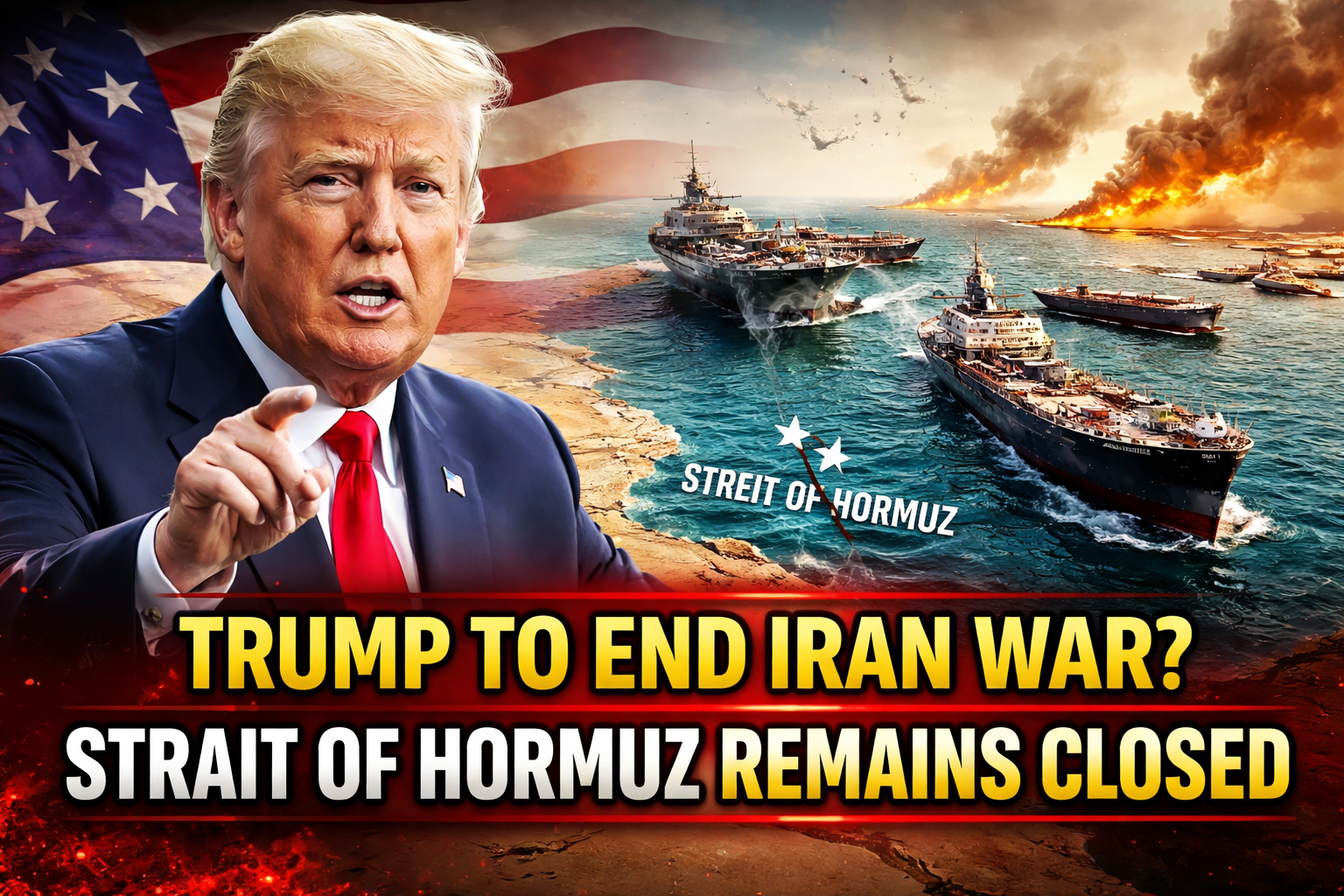
The ongoing conflict between the United States and Iran has taken a surprising turn. Reports suggest that former U.S. President Donald Trump may be willing to end the war without ensuring the reopening of the Strait of Hormuz—one of the world’s most critical oil shipping routes.
This unexpected shift in strategy could have far-reaching consequences for global energy markets, geopolitical stability, and economic growth.
📌 What Is the Strait of Hormuz and Why Is It Important?
Contents
- 1 📌 What Is the Strait of Hormuz and Why Is It Important?
- 2 ⚔️ Trump’s New Strategy: Ending War Without Reopening Hormuz
- 3 🌍 Impact on Global Oil Markets
- 4 🔍 Why Avoid Reopening the Strait?
- 5 🤝 Diplomatic Angle: Negotiations vs Military Action
- 6 🌐 Global Implications
- 7 📊 Impact on India and Emerging Economies
- 8 🧠 Expert Takeaways
- 9 🏁 Conclusion
The Strait of Hormuz is a narrow passage connecting the Persian Gulf to the Arabian Sea. It is considered one of the most vital chokepoints in global trade.
Key Facts:
- Around 20% of the world’s oil supply passes through this route
- It is crucial for oil exports from countries like Saudi Arabia, UAE, and Iraq
- Any disruption can cause global oil prices to spike
Due to the ongoing war, the strait has been partially or nearly closed, severely affecting global oil supply chains.
⚔️ Trump’s New Strategy: Ending War Without Reopening Hormuz
According to recent reports, Donald Trump has indicated that he may end the military campaign against Iran even if the Strait of Hormuz remains closed.
What This Means:
- Reopening the strait is no longer a primary objective
- The U.S. may prioritize military and strategic goals over trade routes
- The responsibility to reopen the strait could shift to allies or future negotiations
This marks a major policy shift, especially since earlier statements emphasized reopening the waterway as a key goal.
🌍 Impact on Global Oil Markets
The decision not to reopen the Strait immediately has already started influencing oil prices.
Key Market Reactions:
- Oil prices fell slightly after news of possible de-escalation
- However, analysts warn that prices may remain volatile
- Full stability depends on restoration of oil flow
Why Volatility Continues:
- Supply disruptions still exist
- Uncertainty over future shipping routes
- Rising geopolitical risks in the Middle East
Even if the war ends, the economic impact may continue due to restricted oil movement.
🔍 Why Avoid Reopening the Strait?
Reopening the Strait of Hormuz is not a simple task. It involves significant military and logistical challenges.
Major Challenges:
- Presence of mines and naval threats
- Risk of large-scale military escalation
- Potential casualties and prolonged conflict
- Need for international cooperation
Experts warn that forcibly reopening the strait could be risky and may not guarantee long-term stability.
🤝 Diplomatic Angle: Negotiations vs Military Action
While military pressure continues, there are also signs of diplomatic efforts.
Current Developments:
- The U.S. claims it is in talks with Iranian leaders
- Iran has denied direct negotiations
- Mediators like Pakistan and regional players are involved
This dual approach—military pressure combined with diplomacy—suggests that the conflict could end through negotiation rather than force.
🌐 Global Implications
Ending the war without reopening the strait could reshape global geopolitics.
Potential Outcomes:
- Oil-importing countries may face prolonged high prices
- Energy markets may remain unstable
- Allies may need to take responsibility for securing trade routes
- Iran may retain leverage over global oil supply
This shift could redefine power dynamics in the Middle East and beyond.
📊 Impact on India and Emerging Economies
Countries like India, which rely heavily on oil imports, could feel the impact strongly.
Key Concerns:
- Higher fuel prices
- Increased inflation
- Pressure on currency and trade balance
For India, stability in the Strait of Hormuz is critical for economic growth and energy security.
🧠 Expert Takeaways
- Ending the war does not equal economic stability
- The Strait of Hormuz remains a critical risk factor
- Markets may react positively in the short term, but long-term uncertainty remains
🏁 Conclusion
The possibility that Donald Trump may end the Iran war without reopening the Strait of Hormuz represents a major shift in global strategy.
While it may reduce immediate military tensions, it leaves unresolved challenges in global trade and energy supply. The world will be watching closely as this situation unfolds, with significant implications for economies, markets, and geopolitical stability.